
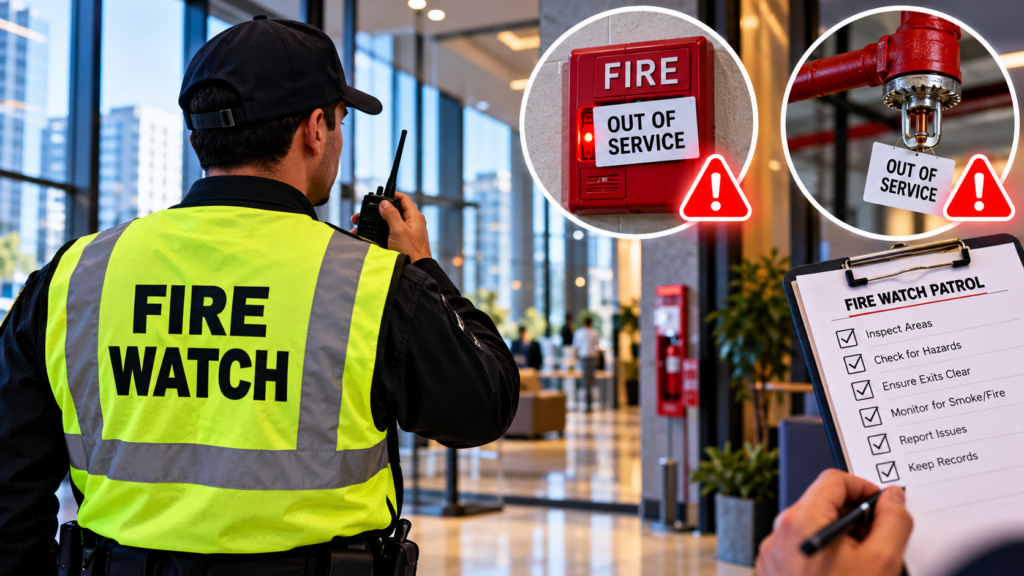
When a fire alarm, sprinkler system, or any other safety equipment does not work in a business building, it can be much easier for a fire to do damage. A stop in these systems, even for a quick moment, can put people, guests, things, tools, and the building in danger. They do not have what keeps them safe anymore.
A professional fire watch is there to watch over things when repairs, testing, or work is going on. It does not take the place of the broken system. Instead, there is a team that stays alert. They can see dangers fast and do something if there is an emergency.
Immediate Oversight When Protection Systems Go Offline
When something that matters breaks, fire watch guards stay at the site to watch over the building. This job is very important, mainly in commercial buildings where people are still in the building. They keep an eye on the place while experts fix what is wrong.
Patrols can check the parts of the property that need more care. They will look at the exits, stairwells, places with equipment, storage areas, and other spots that could have more risk.
Key responsibilities may include:
- Do scheduled checks around the building
- Look for smoke, fire, heat, and any dangers that seem odd
- Make sure exits and walkways are open to use
- Find things that might start a fire
- Tell someone right away about unsafe things
- Start emergency steps if needed
- Keep clear records of all patrols
Turning a System Failure Into a Controlled Response
A sudden outage does not always mean that every business needs to stop right away. The way you should respond will depend on what system is down, how the building is, fire codes, and the rules from local leaders. IFC 901.7 says that if fire safety systems are not working, you may need to let people know and either clear out the building or bring in an approved fire watch.
| System or Situation | Potential Concern | Fire Watch Focus |
|---|---|---|
| Fire alarm outage | Delayed detection or notification | Frequent patrols and immediate escalation |
| Sprinkler impairment | Reduced suppression capability | Monitor affected zones and hazards |
| Hot work | Sparks or ignition sources | Dedicated observation of work areas |
| Construction activity | Changing fire risks | Patrol changing site conditions |
| Planned maintenance | Temporary protection gap | Continuous coverage until restoration |
The goal is not only to have someone around. Good coverage means people should watch what happens. There should be clear paths to walk. People need ways to talk with each other. Records also have to be right.
Protecting More Than the Building
A fire can damage more than the building itself. There may be inventory, machines, electronics, papers, stuff that belongs to people in the building, and other things people use for work that can get ruined fast.
A trained guard is there to look for signs of danger before things get bad. When they see smoke or fire, they know what to do. They call for help and help people get out if needed. The fire watch team writes down what they see each round. This gives a good record of how things were during the problem.
For people who take care of property, this paperwork is important. It helps show that someone kept looking after things, even if there was a power cut.
Maintaining Coverage Until Systems Are Restored
The gap in safety should not stop just because a technician is there. A fire watch should still be there as long as needed. It will go on until they fix, check, and turn the system back on. The fire watch can only end when the person in charge says so.
That continuity matters during:
- Overnight repairs
- Weekend work to fix and check things
- Long equipment problems
- Commercial changes to stores or buildings
- Checking sprinklers or alarms
- The fire marshal said there needs to be coverage
A planned handoff between the guards and the site team can help to stop gaps in the shifts. This way, they all know when one person ends the work and the other starts. By doing this, their work goes smoothly, and there is no missed time. It also helps everyone feel sure that someone is always there at the site.
Conclusion
Sudden problems with fire safety systems can bring big risks fast. But if you have good on-site checks at your building, you can handle this situation well. A team of skilled fire watch guards will walk around the place, spot fire risks, act quickly if needed, and keep clear records. They give you a strong backup until your usual systems are back and working.