If you’re a parent or teacher hunting for a way to make math practice feel less like homework and more like play, chances are Prodigy Math Game has crossed your radar. It’s been a go-to name in gamified education for years, but the platform has changed a lot recently. Here’s an honest, up-to-date look at what it offers, what it costs, and whether it still earns a spot on your child’s device.
What Is Prodigy Math Game?
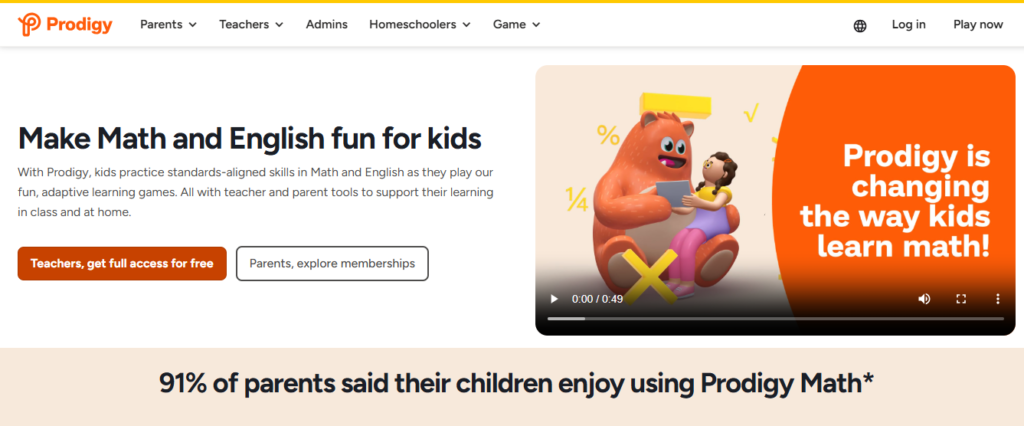
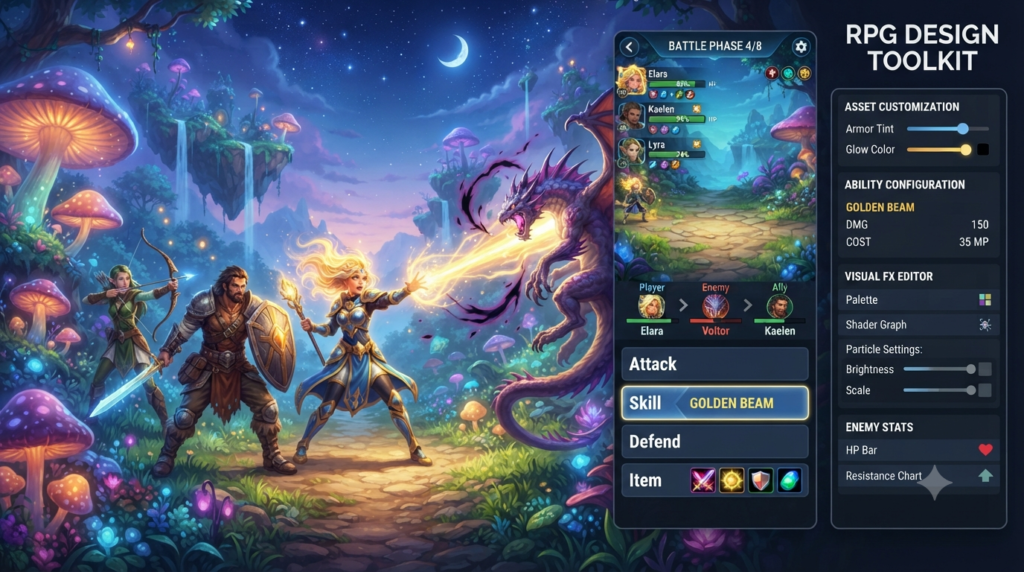
Prodigy is a free-to-play, RPG-style learning platform built for students in grades 1 through 8. Kids create a character, explore a fantasy world, and battle monsters, but every battle move requires solving a math problem first. Instead of pausing the fun to “do math,” the two are woven together, which is exactly why the game has stuck around in classrooms and homes for so long.
The platform is used by tens of millions of students and a large base of teachers, and it aligns its questions with major curriculum standards, including Common Core, TEKS, and various provincial and state frameworks. That alignment is a big reason schools trust it as a supplemental tool rather than just a distraction.
Key Features
- Adaptive difficulty: The game quietly adjusts question difficulty based on how a child performs, so kids aren’t stuck being bored or overwhelmed.
- Parent and teacher dashboards: Real-time reports show time spent, skills practiced, and areas where a child is struggling, genuinely useful for tracking progress without hovering over their shoulder.
- Curriculum coverage: Hundreds of math skills are mapped to grade-level standards, making it easy to slot into homeschool plans or use as classroom reinforcement.
- Placement testing: New players take an in-game diagnostic that places them at the right skill level automatically.
Pricing Breakdown
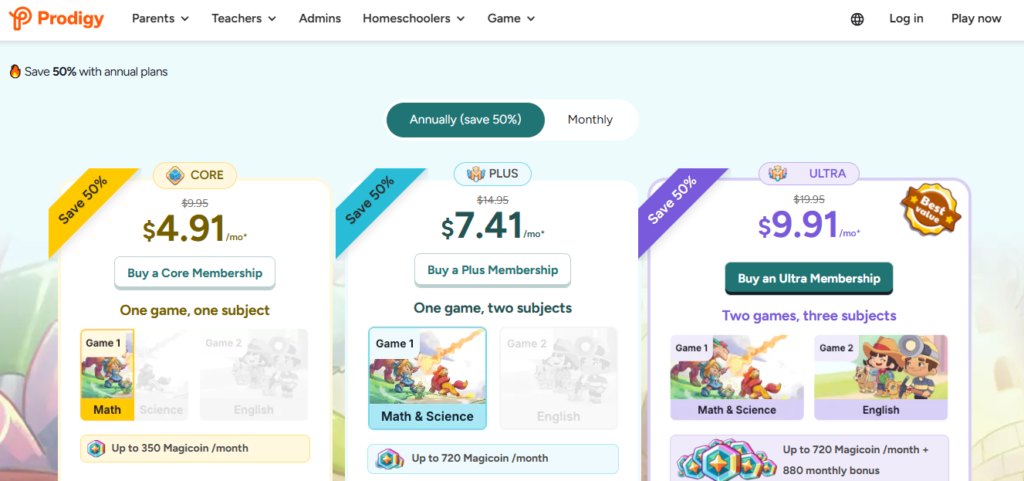
This is where Prodigy has shifted the most. The core math and English educational content remains free, no paywall on the actual learning. However, the game now pushes several premium membership tiers that unlock cosmetic items, pets, exclusive areas, and unlimited in-game battles.
Pricing generally runs from around $9–10 per month on a monthly plan, with annual plans dropping the effective cost closer to $5–8 per month depending on the tier (Core, Level Up, or Ultimate/Ultra). Free-tier players can still access all the math content, but they now face daily battle limits and frequent prompts to upgrade, a sticking point for many long-time users.
Pros
- All actual math instruction and practice remains free.
- Strong curriculum alignment across grade levels and regions.
- Genuinely engaging for kids who already like RPGs or fantasy games.
- Detailed, useful parent/teacher reporting tools.
- Scales well for families managing multiple kids at different skill levels.
Cons
- Frequent upsell prompts can frustrate both kids and parents.
- Daily battle caps on the free tier interrupt gameplay flow.
- Some long-time users report the game has grown more “pay-to-win,” with pet evolution and cosmetic progress increasingly gated behind payment.
- Progress can feel slower without a membership, which may discourage younger players.
Who It’s Best For
Prodigy is best suited to kids who already enjoy fantasy or RPG-style games and to parents who want detailed, data-driven visibility into their child’s math practice. It also works well for families managing several children across different grade levels, since the adaptive system adjusts individually for each profile.
It’s less ideal for parents who want a completely ad-free, upsell-free experience, or families who’d rather avoid any premium pressure directed at kids. If that’s a dealbreaker, free alternatives like Khan Academy Kids are worth comparing, and platforms like DragonBox may suit families prioritizing deeper conceptual understanding over gamified repetition.
Final Verdict
Prodigy Math Game is still a solid, curriculum-aligned tool for making math practice more engaging, the core learning experience remains free and genuinely effective. But it’s no longer the clear-cut favorite it once was. The growing emphasis on premium features and the pressure tactics aimed at young players are real drawbacks worth weighing before you commit. If your child is motivated by the RPG format and you’re comfortable with an optional membership, it’s still a worthwhile addition to their learning routine. If you’d rather avoid the upsell entirely, it’s worth test-driving a free alternative first.